Architectural Objects
Bram Vanderbeke creates Architectural Objects: monumental designs with a distinctive materiality and aesthetic.
In doing so, Bram suggests considering the status of these works as intermediate. Not so much to declare them
unfinished, but rather as an accentuation of their intrinsic potential – their capacity to vary and alter, according to the circumstances they may once become part of. The works introduce an interaction between space and object and between architecture and function. Stacking is a vital word in relation to these Architectural Objects. Since it is this stacking – the deliberate and, above all, physical act of placing something on top of another – which is the foundati- on of many of them. When looked at from a distance, the Architectural Objects generously emphasise their context, revive its identity and introduce a new rhythm. Once in closer view, the objects also reveal their other qualities. On the one hand, this is the moment when the objects unveil their function and when an observer becomes a user. On the other hand, it is the point where materiality takes over, led by the textures and shades of the surfaces, the ra- wness and solidity of form and substance. They echo a process which is both experimental and intentional, bodily and mental.
Brick Chair
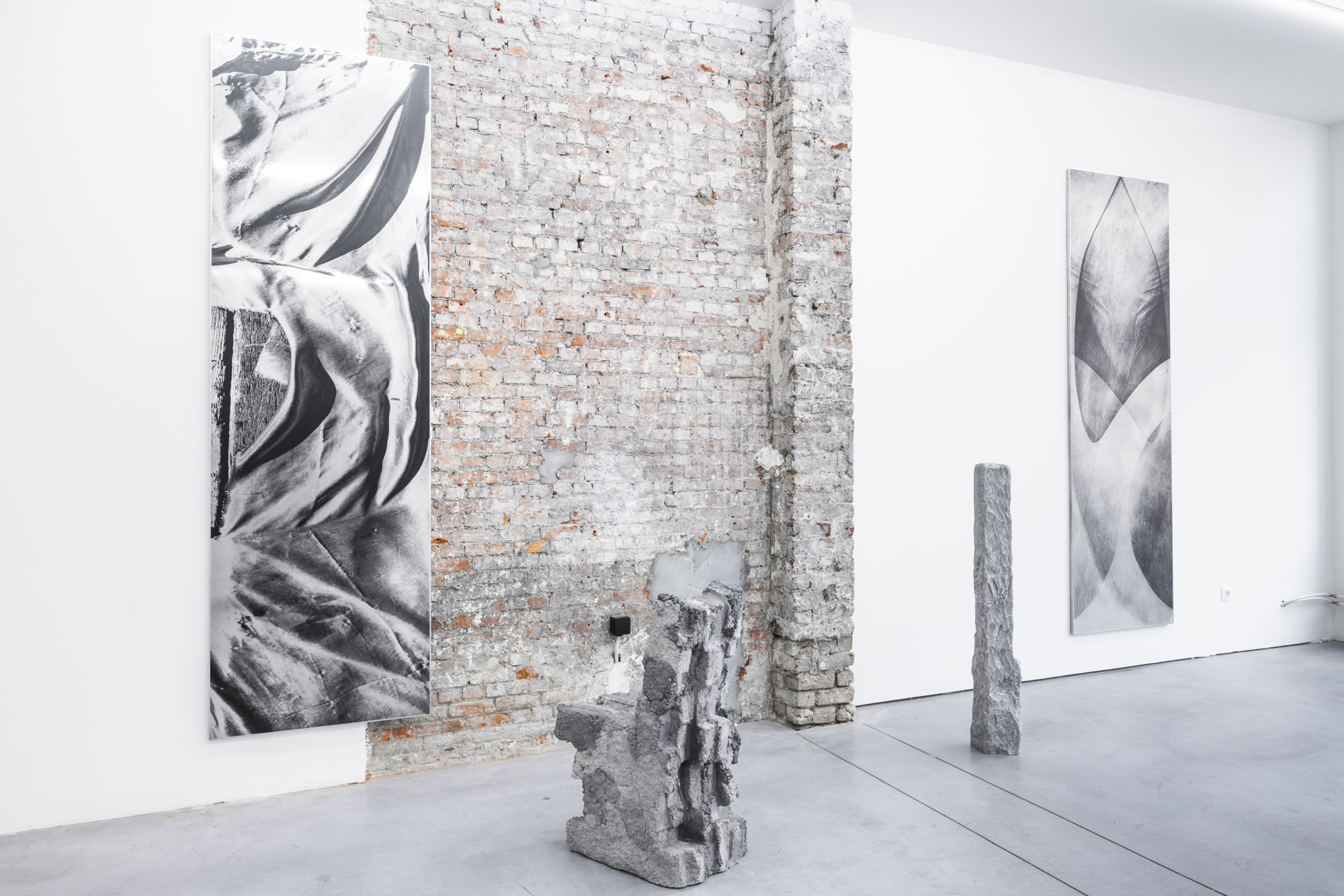
Regular bricks are arranged into both methodical and intuitive compositions on the floor of the working space. In
doing so, Bram Vanderbeke creates negative spaces, which are then used as unique moulds for the creation of (ab-stract and) architectural furniture pieces – benches, stools, side tables or pedestals. This straightforward techniqueis inspired by the way in which construction workers realize the fundaments for a building. The resulting Casted Ob-jects repeat the rhythm and texture of the brick moulds, including the stones’ raw and grainy surfaces. The prominentseams echo the liberty of the method and introduce a primitivistic aesthetic.
Alucast
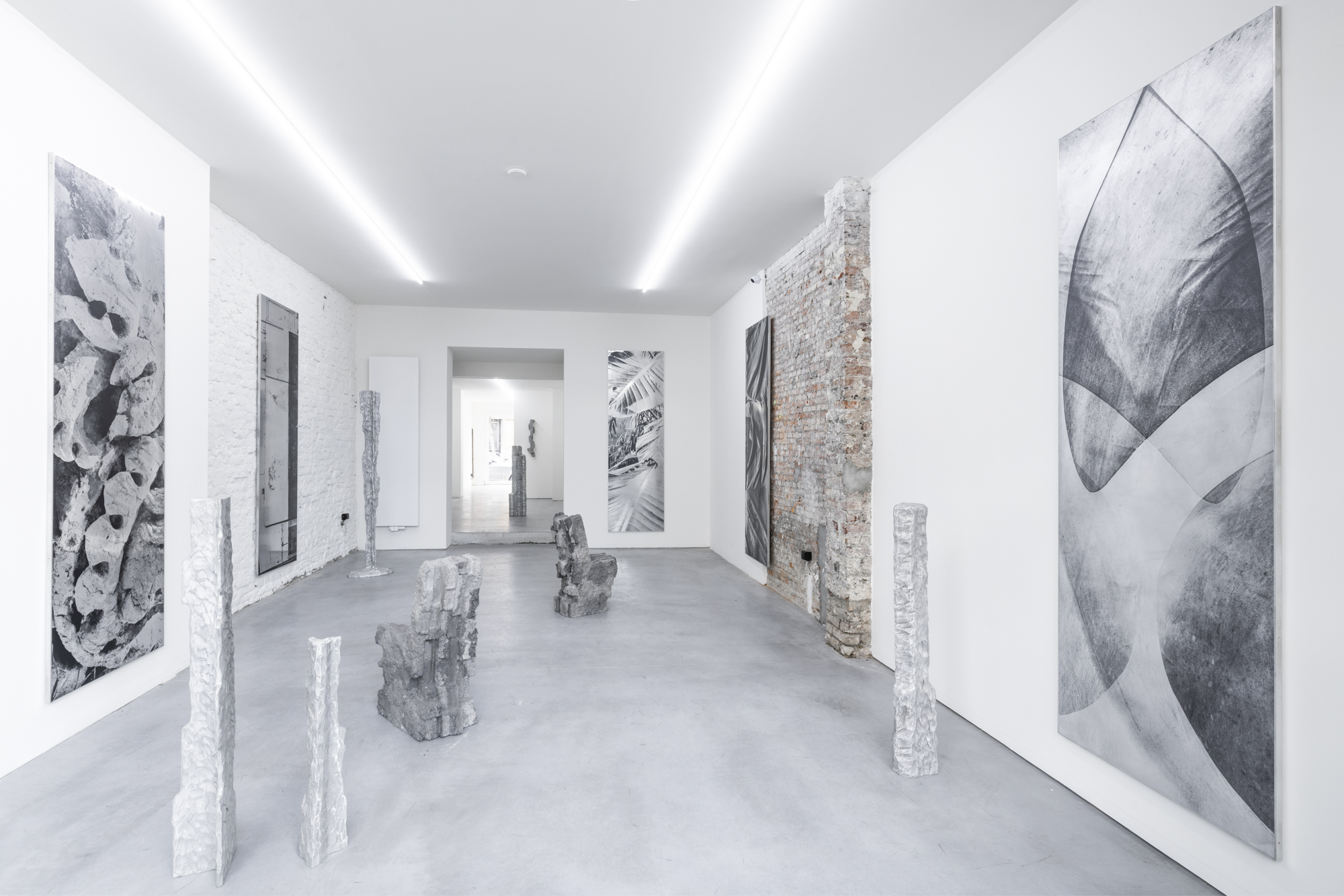
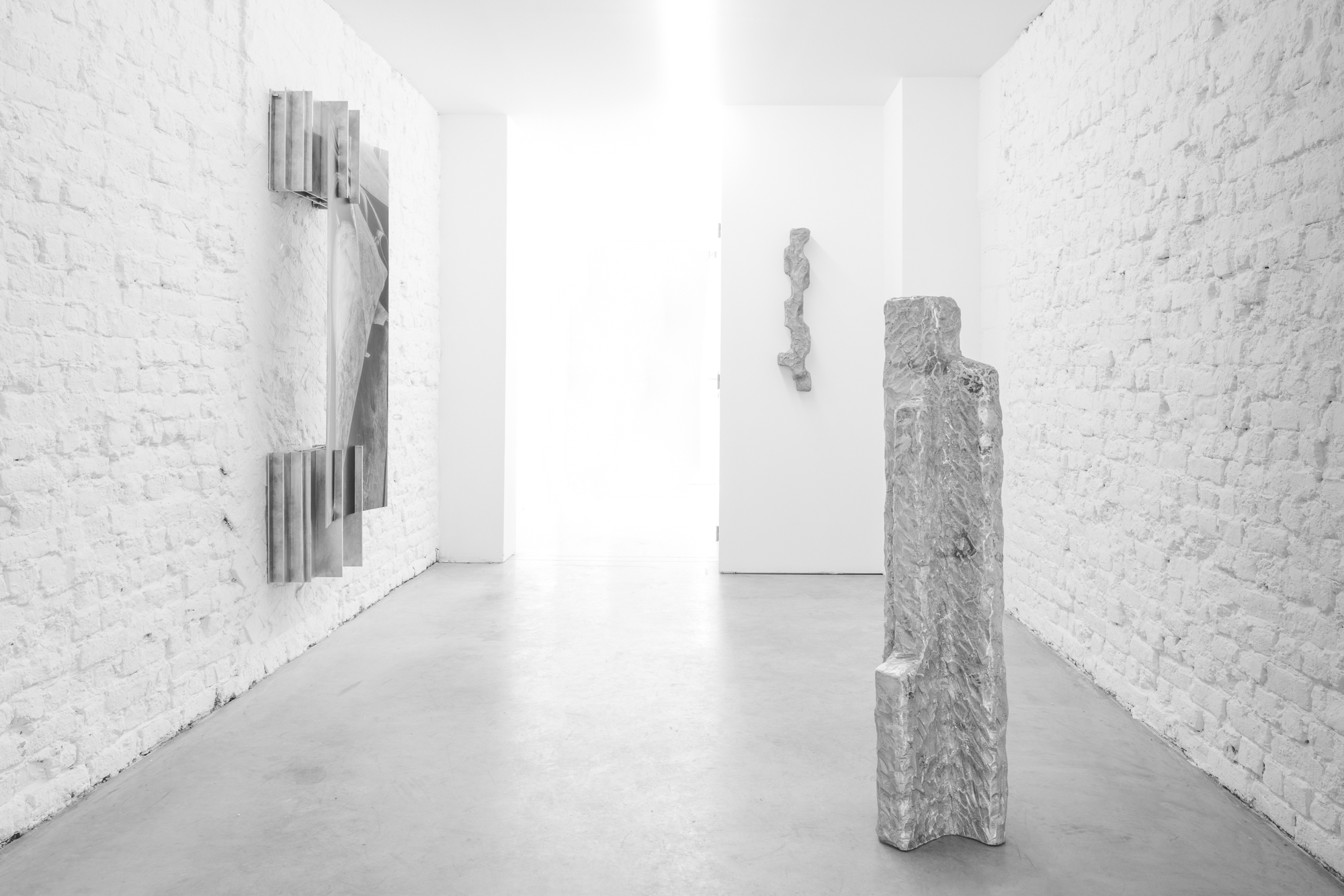
A series of aluminum casted objects. The molds of these objects are sculpted out of big foam blocks, an intensive
and physical process which is explicated by the scars on the surface. The objects are roughly polished what makes them both reflect as well as absorb light.
Sybren Vanoverberghe works with photography, installations, structures, and found objects, exploring landscapes
and the traces they carry to show how place and time are always in flux. His work examines how histories are em-
bedded in terrain, revealing the ways in which cultural memory, material presence, and natural processes intersect. Over recent years, experiments with printing and framing techniques and a wide range of materials have become an integral part of his practice, extending photography into physical form and frequently blurring the boundaries between image, object, and installation.
Vanoverberghe has developed his work across Europe, West Asia, and Egypt, where he studies how landscapes
function as witnesses to cultural continuity, displacement, and transformation. Whether engaging with sites in Eu-
rope shaped by overlapping historical, political, and material processes, landscapes across West Asia marked by
long-standing cultural and geopolitical entanglements, or locations in Egypt bearing extended continuities of humanpresence, his practice reflects on how human activity and natural forces continuously shape one another over time. His images often appear both familiar and temporally ambiguous, evoking histories that may never have fully existed while simultaneously pointing toward possible futures. This tension lends his work an anachronistic quality, situated between past and future at once. In his books and installations, Vanoverberghe approaches sites in a cyclical and non-linear manner, situating them beyond fixed or singular geographic readings and placing them within broader narratives of time, memory, and material transformation. Ultimately, his work invites viewers to reflect on the dual nature of images: whether they function as documents of what once was, or as speculative spaces for what might still emerge.